HOA Meeting Minutes Approval and Record Retention Workflow
A practical workflow for HOA boards that need meeting minutes, approvals, and retained records to stay consistent from draft through archive.
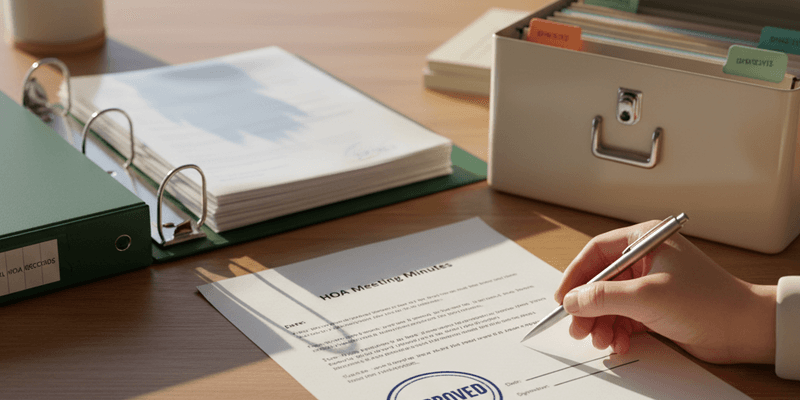
Boards often talk about meeting minutes as if they are a simple writing task. In practice, the harder part is controlling the workflow around them: who drafts them, when directors comment, which version becomes the record copy, and where the final packet is stored.
A clean workflow keeps minutes from becoming a recurring governance clean-up exercise.
Define the minutes owner before the meeting starts
The board should know in advance:
- who drafts the minutes,
- when the draft is due,
- who can suggest edits,
- when the board expects to approve them, and
- where the final version will be archived.
If those rules are decided after the meeting, the record usually drifts.
What the draft should capture consistently
Well-run minutes do not need to be theatrical. They do need to be complete. Capture:
- date, time, and location,
- attendance and quorum,
- motions or actions considered,
- the result of each vote or board direction,
- key follow-up assignments, and
- referenced attachments or exhibits if they are part of the meeting packet.
This structure gives the association a usable operational and governance record.
A simple approval workflow
Most associations benefit from a repeatable sequence:
- circulate the draft to directors and the manager on one deadline,
- collect comments in one place,
- prepare one revised version,
- approve that version at the next board touchpoint, and
- archive the approved copy with the agenda and supporting packet.
Avoid multiple parallel redline chains if the board wants a stable final record.
Record retention habits that reduce future friction
After minutes are approved, store them with the notice, agenda, attachments, and any owner-facing follow-up message. The point is not only legal defensibility. It is operational memory. The next board, manager, or vendor should be able to understand what happened without reconstructing the meeting from inbox fragments.
Why this matters outside formal governance
Minutes often become the bridge between governance and execution. If the board approved a vendor transition, rule update, or mailing project, the minutes should make it clear what was approved and who owns the next step.
That clarity helps the association stay organized long after the meeting ends.
Ready to hire?
Browse vetted vendors in our Orange County directory.