HOA Plumbing Vendor Emergency Protocols
Emergency plumbing protocols for OC HOA boards covering vendor response requirements, common-area vs. owner responsibility, and incident documentation.
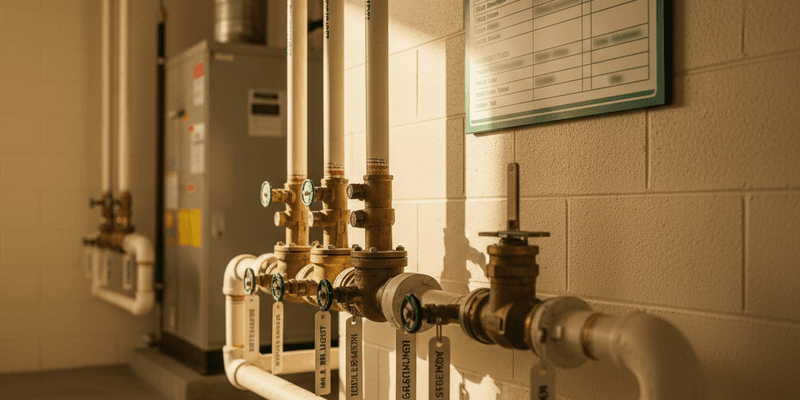
A plumbing emergency in a multi-unit HOA community can cause tens of thousands of dollars in water damage within hours. The board needs pre-established vendor protocols so that when a main line breaks at 2 AM, the response is immediate and documented — not improvised.
Pre-qualifying emergency plumbing vendors
Before an emergency occurs, the board should have at least two pre-qualified plumbing vendors on file. Pre-qualification means:
- the vendor has a current California CSLB C-36 Plumbing Contractor license,
- insurance certificates (general liability and workers' compensation) are on file and current,
- the vendor confirms 24/7 emergency response capability with a maximum two-hour on-site arrival time for OC locations,
- emergency hourly rates and after-hours premiums are documented in advance, and
- the vendor understands the association's common-area plumbing infrastructure (main lines, risers, shared laterals, irrigation backflow).
Defining common-area vs. owner responsibility
One of the most contentious issues during a plumbing emergency is who pays. The board should have clear CC&R language (and legal counsel interpretation) on file addressing:
- Association responsibility: main sewer lines, shared risers, common-area fixtures, fire sprinkler supply lines, and irrigation systems.
- Owner responsibility: individual unit supply lines, unit fixtures, and drain lines from the unit to the shared lateral (this varies by CC&Rs — some associations maintain everything to the unit shut-off valve).
- Gray areas: when a shared riser fails and damages a unit, the association typically repairs the riser while the owner's HO-6 insurance covers interior damage. Document this boundary clearly before an incident forces the board to improvise.
Emergency response checklist
When a plumbing emergency is reported:
- Shut off water at the nearest isolation valve. Management and on-site staff should know the location of all main shut-off valves and have the tools to operate them.
- Contact the pre-qualified vendor using the emergency number on file. Document the time of call and estimated arrival.
- Notify affected residents immediately — identify units at risk of water intrusion and advise them to protect belongings.
- Document the incident with photos, timestamps, and a written log of actions taken.
- Contact the association's insurance carrier if damage appears likely to exceed $5,000 or affects multiple units.
- Arrange water mitigation if needed — a separate restoration vendor may be required for extraction, drying, and mold prevention.
Post-incident documentation
After the emergency is resolved, compile a packet including:
- vendor invoices and scope of work performed,
- photos of damage and repairs,
- resident notifications sent,
- insurance claim filing (if applicable), and
- a root cause summary for the board packet.
This documentation protects the board if owners dispute responsibility or file claims against the association.
Where this article points next
Boards establishing emergency vendor protocols should ensure vendor insurance certificates are tracked systematically and that the resident escalation matrix includes plumbing emergencies as a defined category.
Ready to hire?
Browse vetted vendors in our Orange County directory.